
You’ve sent 40 proposals on Upwork this month and heard nothing back. Meanwhile, a neighbor who runs a small gym asks if you could build her a website. The paid job you didn’t chase is the one that showed up. Was the platform a waste of time, or did you use it the wrong way?
Choosing between Upwork vs Fiverr vs direct clients isn’t about finding the “best” one. They work in different ways: Upwork is built around proposals, Fiverr around packages clients buy, and direct clients around relationships. This guide explains how each works for web developers, what the fees mean on a real project, who each option suits and how to move toward direct clients without breaking platform rules.
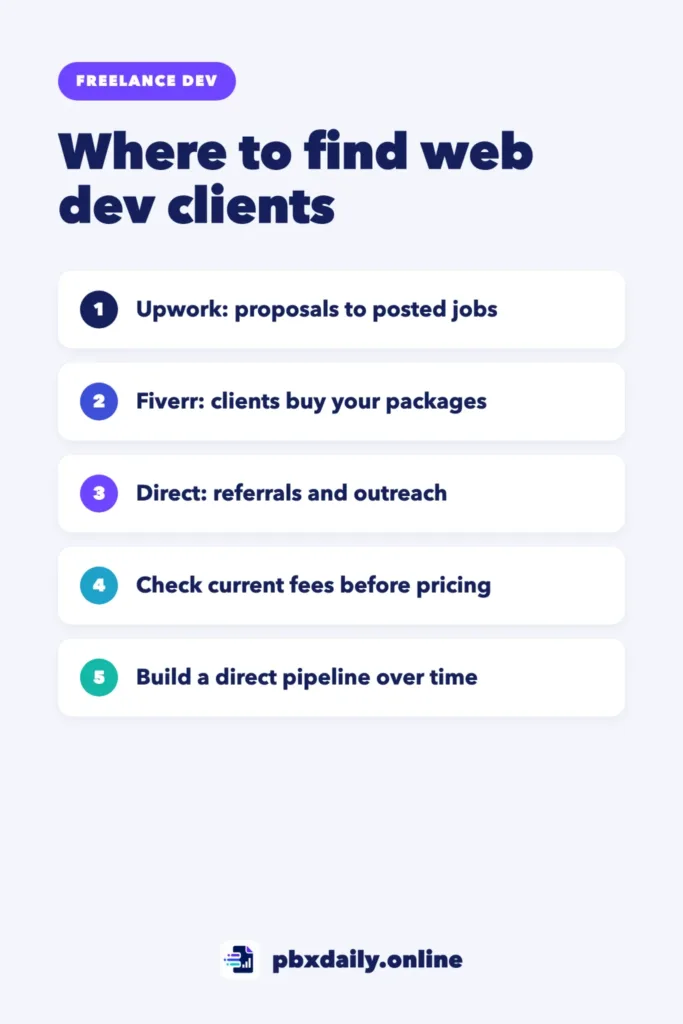
How Each Option Works
Upwork: Proposals to Posted Jobs
Clients post jobs, and freelancers send proposals. Sending a proposal costs Connects, Upwork’s internal credits. According to Upwork’s help center, Connects cost 0.15 USD each and are sold in bundles. When you win a contract, Upwork takes a Freelancer Service Fee that, per Upwork’s fee page, ranges from 0% to 15% per contract. You see the exact percentage before you submit a proposal or accept an offer, and it doesn’t change once the contract starts.
Upwork works well for custom projects, ongoing work and clients who want to compare several freelancers.
Fiverr: Clients Buy Your Packages
On Fiverr, you create “Gigs”: fixed service packages such as “landing page in 5 days” with set prices. Clients browse and buy. According to Fiverr’s help center, freelancers receive 80% of the client’s cleared payment after an order is completed, and funds go through a 14-day clearing period before you can withdraw them, with shorter periods for some programs. Clients also pay a separate service fee at checkout.
Fiverr works well for well-defined, repeatable services where clients know what they want.



Direct Clients: Referrals and Outreach
Direct clients come from your network, referrals, local businesses and your own outreach. There’s no platform fee, and you set your own terms. You also handle everything yourself: finding clients, writing proposals, contracts and getting paid. Our guide on how to get your first freelance web development client covers this path step by step.
Upwork vs Fiverr vs Direct Clients: Side-by-Side Comparison
| Upwork | Fiverr | Direct clients | |
|---|---|---|---|
| How work starts | You send proposals to posted jobs | Clients buy your Gig packages | Referrals, network, outreach |
| Freelancer fee | 0% to 15% per contract, plus Connects to apply | You receive 80% of the order | No platform fee |
| Who finds whom | You find clients | Clients find you | You find clients, then referrals help |
| Payment protection | Through the platform | Through the platform | Your contract and deposit |
| Price control | You set rates, but compete on proposals | You set package prices | Full control |
| Best for | Custom and ongoing projects | Small, defined services | Long-term relationships and higher margins |
Fees change, so check the current numbers on each platform’s official pages before you set your prices.
What the Fees Mean on a Real Project
Imagine a 1,000 USD website project. Here’s roughly what reaches you before payment transfer costs:
- Upwork with a 10% fee: 900 USD, minus the Connects you spent on proposals. With a 15% fee, 850 USD.
- Fiverr: 800 USD, available after the clearing period.
- Direct client: 1,000 USD, minus whatever your payment method charges.
On every option, moving money to your local bank can cost extra in transfer and conversion fees. Our comparison of Wise vs Payoneer vs PayPal shows how to check those costs for your country.
Platform fees aren’t wasted money when you’re starting out. They pay for a stream of clients, payment protection and help with disputes. The question is whether those benefits are worth the cost at your stage.
Which One Fits You
- Choose Upwork if you can write strong proposals, you want custom or long-term projects and you’re willing to spend time applying.
- Choose Fiverr if you can package a clear service with a fixed scope, such as “WordPress site setup” or “landing page from a design,” and you prefer clients coming to you.
- Choose direct clients if you have a network, a local market or a niche you know well, and you’re comfortable handling contracts and payments yourself.
Many freelancers combine them: a platform for steady leads while they build a direct client base.
How to Win Your First Job on Each
- Upwork: apply to small, recent jobs that match one narrow skill. Write a short proposal that mentions the client’s specific problem. Our guide on how to write a freelance proposal that gets replies applies here too.
- Fiverr: create one focused Gig with three clear packages, a portfolio sample and a realistic delivery time. Price it with the 20% fee in mind.
- Direct: tell your network what you do, offer one clear service to one type of business and ask every happy client for a referral. Use our guide on how to price your first freelance web project to set the number.
Moving From Platforms to Direct Clients
This is where many freelancers get into trouble. Both platforms have strict rules about taking clients you met there off the platform:
- Upwork says on its circumvention policy page that getting paid outside Upwork violates its Terms of Service and can lead to permanent loss of your account. It offers official ways to work with a client outside the marketplace, such as a conversion fee, described in its help center.
- Fiverr’s Terms of Service don’t allow you to solicit people you met through Fiverr to work or pay outside the platform.
So the safe way to move toward direct work isn’t to move platform clients off the platform. It’s to build a separate pipeline:
- Use platform projects to build a portfolio and reviews.
- Put that work on your own website and LinkedIn profile. Our guide on how to build a freelance website covers the five pages clients check.
- Tell your network what you do and ask past direct clients for referrals. Our guide to client testimonials and referrals has email templates for both.
- Gradually spend more time on direct leads as they grow.
If you bring your own client to Upwork for its payment protection, Upwork offers Direct Contracts with a reduced fee. Check the current terms on its help center.
Mistakes Web Developers Make on Freelance Platforms
- Underpricing to get the first review. A very low price attracts clients who expect a lot for little. Price modestly, but cover your time.
- Sending the same proposal everywhere. Clients can tell. Mention their project, their problem and one relevant example of your work.
- Offering everything. “Full-stack developer, any project” is easy to skip. “Fast landing pages for local service businesses” is easier to buy.
- Ignoring the fee when quoting. Calculate what you’ll receive after the platform’s cut, not the number the client pays.
- Starting work without a clear scope. Platforms protect payments based on what was agreed, so write the deliverables down in the contract or order.
- Depending on one platform. Rule changes, fee changes or an account problem can stop your income. Keep building direct contacts at the same time.
Upwork vs Fiverr: Frequently Asked Questions
Is Upwork or Fiverr better for beginners?
It depends on how you like to work. Fiverr suits beginners who can offer a small, clearly defined service and prefer clients to find them. Upwork suits beginners who are comfortable writing proposals and want custom projects. Many people try both for a few months and keep the one that brings better clients.
How much does Upwork take?
Upwork’s Freelancer Service Fee ranges from 0% to 15% per contract, and you see the exact rate before you apply or accept an offer. You also pay for Connects to send proposals. Check Upwork’s help center for the current details, since fees can change.
How much does Fiverr take?
Freelancers receive 80% of the order value, so Fiverr keeps 20% on the freelancer’s side. Clients pay an additional service fee at checkout. Funds become available after a clearing period, usually 14 days.
Can I use Upwork and Fiverr at the same time?
Yes, many freelancers have profiles on both. Keep your offers consistent, follow each platform’s rules separately and track where your best clients come from. After a few months, focus your time on the one that brings better projects.
Sources
- Upwork: Learn about the Freelancer Service Fee
- Upwork: Understanding and using Connects
- Upwork: Circumvention, and why it’s against the rules
- Fiverr: How Fiverr works for freelancers
Your Next Step
Pick one option for the next 30 days and commit to it: ten tailored Upwork proposals, one well-built Fiverr Gig or ten direct messages to businesses in one niche. Track the replies. When a project arrives, handle extra requests with our guide on how to handle scope creep as a freelancer.

Luiz Loiola is a digital strategist and the founder of PBX Daily. He writes about technology, programming, artificial intelligence, freelancing, remote work, career change, and online income, helping beginners and professionals build practical digital skills, create new career opportunities, and compete in the global online market.